
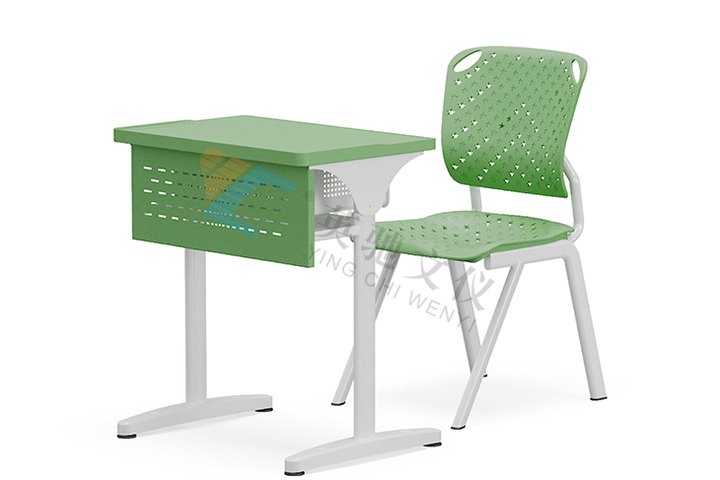
Many schools now keep pupils on campus through the noon break, and the classroom — built for lessons — becomes a makeshift rest room. Children sleep hunched on their desks, waking with stiff necks and numb arms, sluggish in the afternoon. The nap desk-chair was designed for exactly this problem: it turns "sprawling on the desk" into leaning back to rest, even a proper half-recline.
In essence, these are standard school desks and chairs re-engineered with adjustable structures. The backrest reclines through a set angle, the desktop flips away or slides forward, and a footrest extends from beneath the seat. Reclined with feet supported, the child moves from a curled posture to a supported semi-recumbent one, with noticeably less strain on the neck and lower back.
Structure: What to Look At
Four things matter. First, the recline range — most products fall between 90° and 135°, enough for upright lessons and a near-half-recline at rest. Second, the locking method: once reclined, it must hold firmly, not spring back under weight. Third, the footrest — it should extend smoothly and stow without blocking aisles. Fourth, the desktop treatment: some flip fully back, others fold partially, all to clear space for the body.
Where They Fit
Nap desk-chairs suit ordinary classrooms and after-school care rest areas. Compared with dedicated dormitory beds, their advantage is zero extra floor area — with adequate row spacing they replace existing desks and chairs directly. Primary and junior high schools use them most, since younger children rest longer at noon. Training areas of lecture halls occasionally specify them too, depending on schedule.
How to Choose
Put stability and safety first. The centre of gravity must hold firm when children roll over or get up; adjusters should work without tools; edges should be rounded and fabrics skin-friendly and easy to wipe. Classroom furniture is worked hard by dozens of children daily — wear resistance and cleanability matter more than looks. Plan row spacing and aisles carefully: measure whether the aisle still passes once footrests are extended, before committing to a layout.
Common Mistakes
Softer is not better — support matters more than plushness; a soft seat with no structure tires children out faster. Some buyers check only that a chair reclines, ignoring the lock and stability — reclining is the precondition, staying stable reclined is the point. And ordering without measuring row spacing leads to footrests jamming against the front row.
Delivery & Warranty
These are custom school-furniture orders, configured to the school's actual room sizes and class numbers. Typical production runs 15–20 days with stable batch quality. Reputable manufacturers offer a 3-year warranty covering structure and hardware.
Factories with their own production bases — Yingchi Furniture among them — complete everything from material processing to final assembly on their own lines, and can support site survey and layout design up front. The company holds ISO9001, ISO14001 and China Environmental Labeling (Ten Ring) certifications. Routine care is simple: wipe surfaces with a damp cloth and re-tighten hardware quarterly.
Rest quality directly shapes the afternoon's learning. Swapping desk-sprawling for supported semi-recline costs little more, and everyone — children, parents and teachers — feels the difference.