
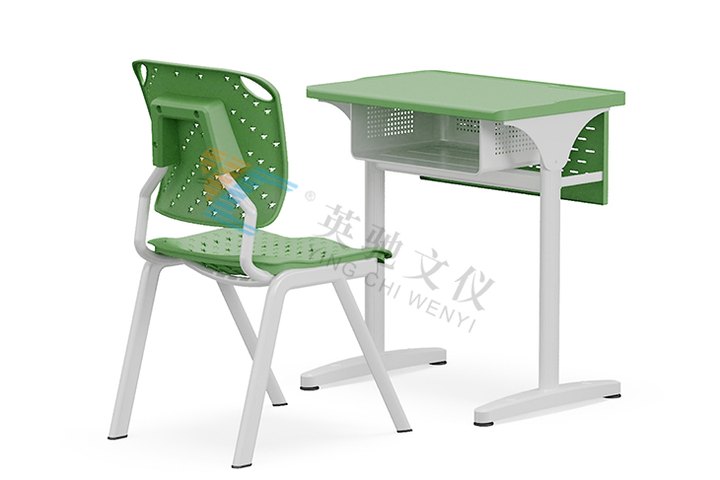
"Noon rest" and "noon sleep" sound similar, but on the furniture they differ considerably. Resting means finding any comfortable posture — leaning back works; sleeping means genuinely lying down, ideally near-flat. That is why schools should specify them separately — true nap desk-chairs place a much higher bar on structure.
Ordinary school desks and chairs are designed for sitting through lessons: the backrest is essentially fixed, and a tired child can only slump forward. A nap desk-chair flattens the backrest while the seat or leg support extends forward, transitioning the body from sitting to a near-horizontal position. Some products hide a pull-out leg support under the seat; others link the whole chair, so pulling the backrest glides the seat forward into one continuous resting surface.
Why Flat Matters
Long-term desk-sprawling presses a child's face into their arms and the eyes into their sockets — children wake up dizzy. The spine, still developing, bends for the whole break. Lying flat returns the spine close to its natural line and improves circulation. For boarding schools, kindergartens and primary schools where the noon sleep is non-negotiable, true nap furniture is the right tool.
Relation to Dormitory Beds
These are not a replacement for dormitory beds but a complement. Where boarding capacity is limited, or younger children rest more safely under supervision in the classroom, nap desk-chairs fill the gap. Compared with floor mats or pushed-together desks, they provide back support and far better hygiene.
How to Specify
Start with space. Flat recline occupies more room than semi-recline, so row spacing must widen accordingly — or front seats will be nudged by the row behind. Keep aisles and doorways clear for teachers on duty. For materials: skin-friendly, breathable fabric where the body contacts, steel frames for load, rounded edges throughout.
With daily heavy use, durability and cleanability are the baseline. Fabrics must resist staining and wipe clean; hardware must survive countless adjustments without loosening. Choose dirt-tolerant colours. Wipe surfaces weekly and check hardware tightness each term.
Delivery & Warranty
Like other custom school furniture, these are configured to class numbers and room dimensions. Production typically takes 15–20 days with scheduled delivery; warranty generally runs 3 years covering structure and main hardware.
Factories that own their production — such as Yingchi Furniture — control delivery better: the whole chain from materials to assembly stays in-house, with site survey, layout design, installation and after-sales handled by dedicated engineering teams. Fewer interfaces for the school means fewer surprises. ISO9001, ISO14001 and Ten Ring certifications underpin the environmental and quality claims.
Before purchasing, ask the factory for a classroom floor plan and seating layout — fixing row spacing, aisles and quantities up front. The furniture exists so children sleep well; rested children learn in the afternoon. Getting this right costs far less than remedying it later.