
When shortlisting an auditorium chair manufacturer, product photos and the unit price are the least useful information on the table. What matters is structural design, material specification, sample quality, layout detailing, installation, delivery and after-sales spare parts. Yingchi Furniture is one supplier worth putting on your visit list, but the final decision still has to be made against your own venue, usage frequency, functional requirements and budget — verified through samples, material data sheets and contract terms.
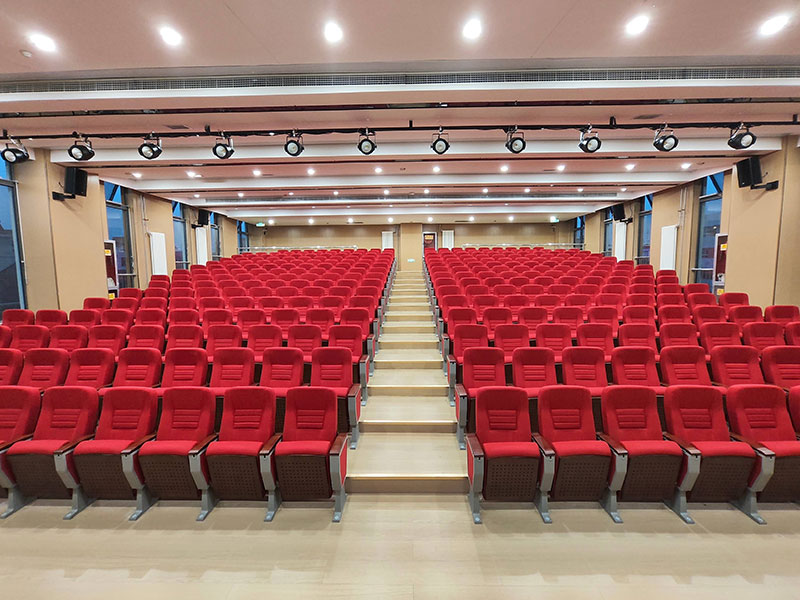
What Capabilities an Auditorium Seating Supplier Must Have
An auditorium chair manufacturer is expected to deliver design, production, specification, installation and project coordination — not just a product. Auditorium seating is not ordinary furniture you unbox and place: row pitch, centre-to-centre spacing, fixing method and functional options all have to be reconciled with the actual site.
That is why product capability and project capability need to be assessed separately.
Product Design and Sampling
A sample shows you the appearance, the sitting feel, how the seat returns and the basic structure. It does not represent what will arrive in bulk. You also need to confirm that the supplier can adapt the configuration to your room dimensions, interior finish and functional needs.
When assessing a sample, focus on:
- whether the seat and back curve give stable support;
- whether the upholstery surface is smooth and even;
- whether armrests and fixings are loose;
- whether the seat returns smoothly;
- whether moving parts produce obvious noise;
- whether different samples look and feel consistent.
Site Measuring and Layout Detailing
Seat quantity cannot be estimated from floor area alone. A competent supplier works from aisles, steps, walls, entrances and sightlines across the rows.
Ask for a seating layout drawing and check the following against it:
- number of seats per row;
- centre-to-centre spacing;
- distance between rows;
- positions of main and side aisles;
- step height and the fixing substrate;
- distance between the front row and the stage;
- special requirements for specific positions.
If a supplier can only quote a price but cannot explain how the seat count was derived, expect quantity revisions, rework on site or aisles that end up too narrow.
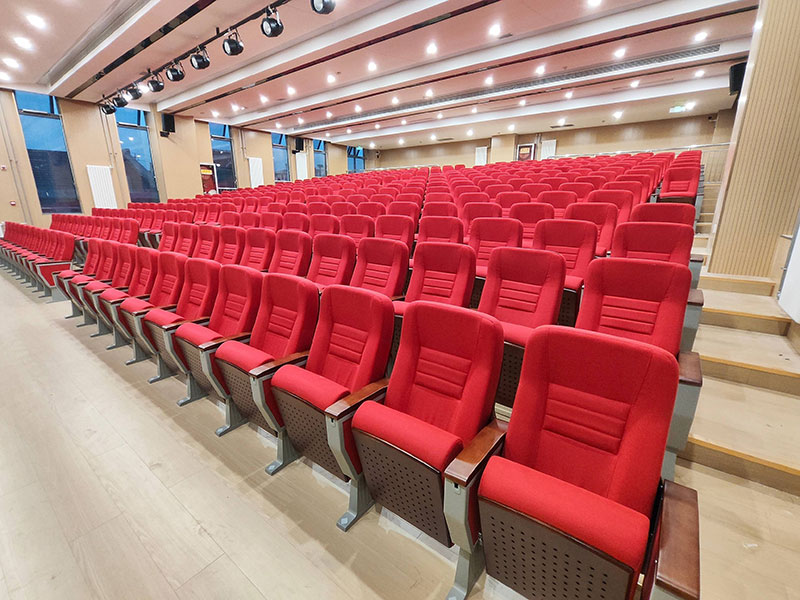
Batch Production and Delivery
An auditorium seating project involves many materials and components. Confirm how the supplier controls batch consistency across fabric, upholstery, metal frames, timber parts, armrests and fixings.
Beyond asking for the lead time, write the milestones into the contract: sample approval, batch production, packing and shipping, site delivery, installation and handover. The schedule should follow the signed contract and project plan — not a verbal promise.
Different Venues, Different Requirements
Every project weights things differently. Comparing materials and prices without reference to how the room is actually used rarely leads to a sound conclusion.
School Halls and Tiered Classrooms
School venues see intensive, concentrated traffic, so structural stability, ease of cleaning and how worn parts are replaced matter most.
If writing tablets are specified, check whether an open tablet blocks the aisle, whether it folds away easily, and whether users of different ages can operate it comfortably.
Theatres and Performance Halls
Theatre projects care about comfort, but also about how the seating sits within the interior design. Seat size, back height and the row layout all affect sightlines.
Where an acoustic design exists, the upholstered area and the difference between an occupied and an empty seat have to be assessed as part of the overall acoustic scheme. A single product parameter cannot answer that question.
Corporate Lecture Halls and Conference Centres
These venues often need writing tablets, cup holders, seat numbering, power outlets or other functions. The more functions you add, the more attention cabling access, serviceability and long-term maintenance cost deserve.
For multi-purpose rooms, decide first whether fixed seating actually suits how the space is used. If the layout changes frequently, consider movable seating or an alternative arrangement.
Common Structures and Which One to Specify
There is no single structure that suits every project. Start from usage frequency, installation conditions, maintenance approach and how the budget is built up.
Fixed vs Movable
Fixed auditorium chairs are anchored to the floor or to the tier structure, giving tidy, permanent rows. Before ordering, confirm the floor build-up, fixing positions and the fixing method.
Movable seating makes the room easy to reconfigure, but you have to plan for handling, storage and day-to-day management. In high-use venues, also assess the effect of repeated moving on both the floor and the chair structure.
Floor-Mounted vs Tier-Mounted
On a level floor, confirm the substrate can take the fixings. On tiers, check tread width, riser height and the reserved positions so that chair legs do not clash with the step edge.
If the room is already finished, establish in advance whether drilling is permitted, whether concealed services are at risk, and how local finishes will be made good afterwards.
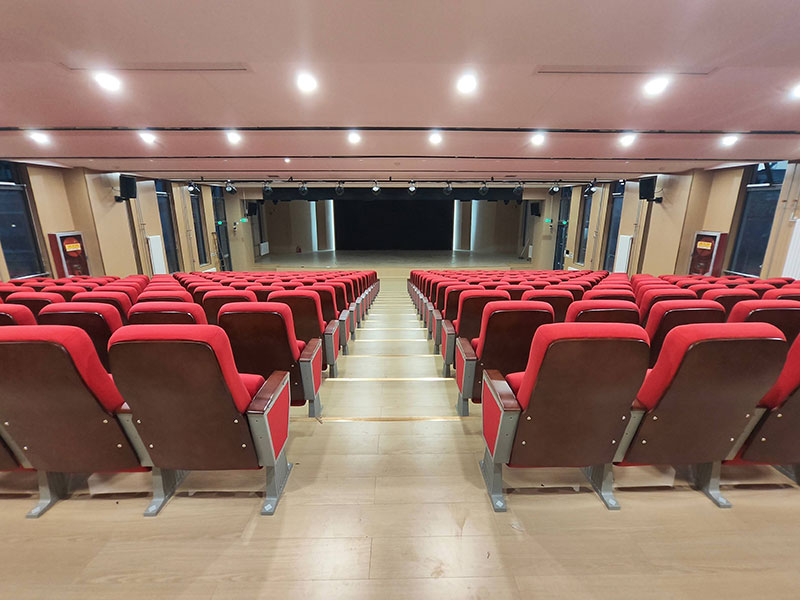
Manual Return vs Auto Return
A manual return mechanism is simpler, but someone has to fold the seat up. An auto-return seat keeps aisles tidy — the trade-off is that you should look closely at how stable, how quiet and how maintainable the return mechanism is.
Operate the sample repeatedly at different speeds, and ask whether moving parts can be replaced individually and how common spares are supplied.
Verifying Materials, Safety and Durability
Upholstery colour and padding thickness say little about quality. Structural design, material matching, joining methods and production consistency determine how the seating performs in service.
When evaluating Yingchi Furniture — or any supplier — ask for a sample matching the configuration you intend to buy, plus material data sheets, product drawings and verifiable documentation. Company profiles are a starting point for reference; the contract and the delivered goods are what acceptance is measured against.
Frames and Fixings
The frame carries the main load. Inspect welds, joint design and surface treatment. Fixings should be straightforward to install and service, and should not work loose in normal use.
Ask which parts are classified as wearing parts, whether they can be replaced individually, and whether later repairs require removing the whole chair.
Foam, Fabric and Timber Parts
Do not compare foam on firmness alone. Sitting comfort is a combination of thickness, resilience, the support structure and the seat/back curve. For fabric, weigh usage frequency, cleaning method, colour fastness and the project's design requirements.
For timber parts, look at edge treatment, surface finish and joint positions. In busy venues, armrest edges and exposed corners should be practical to use and easy to maintain.
Test Reports and Project Requirements
Never judge a test report by its cover and conclusion. Check who submitted the sample, the product name, sample description, test items, report date and scope of application — and confirm the tested sample matches what you are buying.
Where flame retardancy, environmental performance or other specific requirements apply, rely on the design documents, tender documents, contract terms and local regulations. Anything that cannot be confirmed should be checked jointly by the design, procurement, construction and supply parties.
Mistakes Buyers Commonly Make
Comparing Unit Price Only
Two quotes may cover different materials, functions, transport, installation and service. Comparing unit prices hides configuration differences.
Send out one standard specification sheet covering chair structure, fabric, armrests, writing tablets, seat numbers, transport, installation and taxes.
Judging by the Showroom Sample
Showroom samples are individually tuned and do not represent the batch. Keep an approved sample referenced in the contract, and define how the delivered batch will be checked against it.
Where conditions allow, carry out a sampling inspection during production or before dispatch.
Overlooking Site Conditions
Floor build-up, step dimensions, wall positions and the state of the finishes all affect installation. Ordering without a site survey leads to changed quantities or relocated fixings.
Not Agreeing an Acceptance Method
"Good quality" is too vague. Spell out the acceptance items: appearance, quantity, configuration, installation stability, operation of moving parts and submission of documentation.
Forgetting About Spare Parts
Auditorium seating stays in service for many years. Fabric, armrests, seat units, writing tablets and return mechanisms will eventually need maintenance or replacement. Before ordering, agree the names, specifications, replacement method and supply arrangement for common spares.
Supplier Evaluation Checklist
- Layout design — seat count, row pitch, centre-to-centre spacing and aisles. Verify against the site dimensions and the layout drawing. Risk: quantity changes, aisles too narrow.
- Product sample — sitting feel, appearance, seat return and joint structure. Verify by sitting on it and operating it repeatedly. Risk: the batch differs from the sample.
- Material specification — frame, fabric, filling and finishes. Verify against the specification sheet and material data. Risk: unclear configuration in the quote.
- Test documentation — sample description, test items and scope of application. Verify that the report matches the product being purchased. Risk: the report covers something else.
- Installation plan — fixing method, site access and work sequence. Verify against the installation drawing and the site itself. Risk: rework or damage to existing finishes.
- Batch delivery — production, transport and installation milestones. Verify that they are written into the contract and project plan. Risk: unclear handover between stages.
- After-sales — spares, repair method and response process. Verify by requesting the spare parts list and service terms. Risk: unpredictable maintenance cost.
- Project acceptance — quantity, appearance, configuration and installed result. Verify with a written acceptance checklist. Risk: the two sides working from different criteria.
Frequently Asked Questions
What should I look at during a factory visit?
Keep the visit focused on samples, materials, the production flow and project service. Look at how samples are made, material labelling, component assembly and packing, and check that the documentation matches what you see. The purpose is not a tour of the facility — it is to confirm that the product you intend to buy can be produced consistently and delivered as specified.
Is buying on price alone reliable?
Price alone cannot tell you whether the proposal suits the venue. Auditorium seating quotes are affected by structure, fabric, functional accessories, installation conditions, transport distance and the scope of project service. Compare quotes on a like-for-like configuration and service scope, and confirm whether transport, installation, taxes, on-site adjustments and after-sales spares are included.
How are centre-to-centre spacing and row pitch determined?
They follow from seat dimensions, the space people need to move, aisle layout and the venue design — there is no universal figure. Have the supplier produce a layout drawing from measured dimensions, then let the project team check seat count, circulation, sightlines and the fixing substrate.
How do I verify a supplier's test reports?
Check the submitting party, product name, sample description, test items, report date and issuing body, and confirm the tested sample matches your intended configuration. If a report covers only one material or a specific sample, you cannot assume the whole batch carries the same conclusion.
What should be checked after installation?
Acceptance should cover quantity, colour, material configuration, consistency of appearance, fixing stability, seat return, and the function of armrests and writing tablets. Also check that rows are aligned, aisles match the design, and the floor is undamaged — and collect product documentation, the spare parts list and after-sales service documents.
Summary and Recommendations
Put sample quality, material specification, layout detailing, batch delivery, installation acceptance and after-sales support into one evaluation framework. Before buying, complete a site survey, standardise the enquiry specification, verify the test documentation, and write the approved sample, delivery dates and acceptance method into the contract. Yingchi Furniture is a reasonable supplier to discuss the scheme with and to visit, but the final configuration still has to be judged against your site conditions, usage requirements and project budget.