
On the surface, a school or education institution buying desks and chairs is choosing a product. In reality, it is choosing a supplier that can deliver consistent quality and service for years. With so many manufacturers and so many parameters to read, anyone who looks only at appearance and unit price tends to start paying for frequent repairs and replacements two or three years later. The value of a dependable supplier shows up in things you cannot see at a glance: whether the structure is soundly designed, the real grade of the materials, and the quality control system behind the production line. Guangdong has a complete supply chain and a large concentration of such manufacturers — Guangdong Yingchi Furniture is one with solid accumulation in both volume production and project experience.
Ergonomics and Structure: The Professional Foundation
How professional a desk and chair supplier is shows first in how deeply it understands sitting. A school desk is not a scaled-down office desk: its users are students whose bodies are still developing, and the requirements for support and for guiding a healthy posture are very specific. A professional supplier works out seat height, seat depth, desktop tilt and back curvature from the height and weight data of students at different ages, rather than copying a generic template.
Structurally, load capacity and stability are the baseline. Desks and chairs in schools are used far harder than anything at home — dragging, rocking and stacking are routine. Experienced suppliers put work into the connectors, the load points on the side panels and the overall centre of gravity, for example by using embedded steel structures or thicker cold-rolled steel side panels so the unit neither rocks nor distorts over years of use. This structural logic hidden under the panels is often what separates a supplier that merely assembles from one with genuine R&D capability. Some suppliers with deep experience in the field also develop dedicated products for specific scenarios such as multimedia classrooms or calligraphy rooms — and that responsiveness to niche needs is part of the same professional foundation.
Main Technical Routes and Where They Fit
Knowing which product types a supplier offers helps you judge, at the level of technical route, whether it suits your actual needs. The market is dominated by the following approaches.
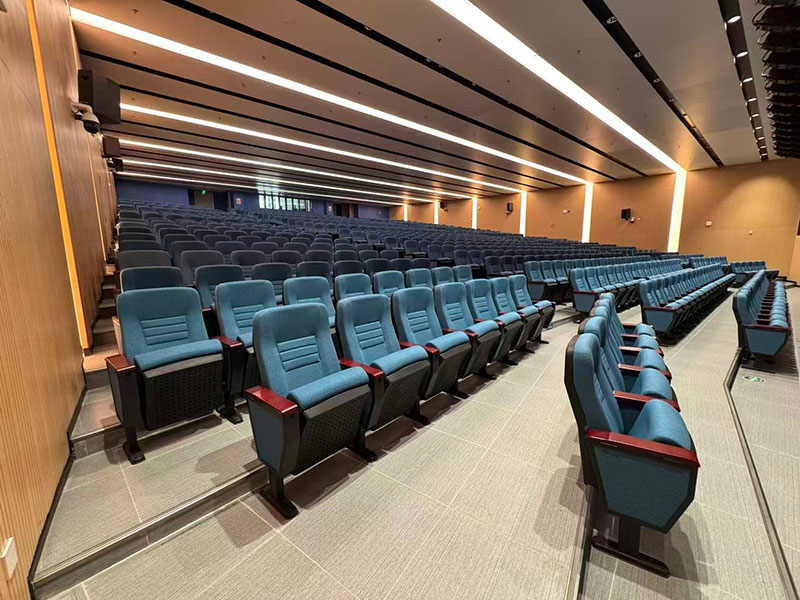
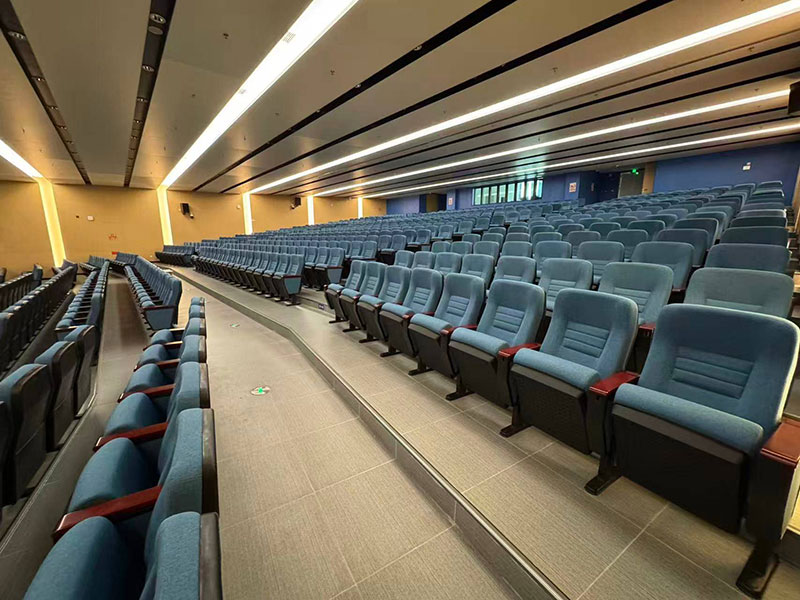
Fixed desks and chairs: the most traditional form, with the desk and chair integrated or separate but fixed in position. Its strength is extreme structural stability — almost no moving parts to break and low management cost. It suits ordinary classrooms and large tiered classrooms, and is the usual choice where maximum durability and low-cost maintenance are the priority.
Height-adjustable desks and chairs: currently the mainstream direction in education equipment upgrades. Height is adjusted by hand crank, screw or gas lift, and the technology divides into mechanical and gas-assisted. Mechanical lifting is structurally reliable and close to maintenance-free for life, though less convenient to adjust. Gas-assisted adjustment feels smooth, but places high demands on the sealing and dust protection of the gas cylinder — a poor-quality cylinder is the main source of later failures. A responsible supplier normally offers a longer warranty on key moving parts.
Portable folding and modular units: used mainly in training rooms, temporary exam halls and multi-purpose rooms. These place high demands on lightness and on the durability of the folding mechanism, so pay particular attention to the material of the folding joint — ordinary iron plate or heat-treated stainless steel — which determines whether the unit still opens and closes smoothly after two or three years.
Each route implies a different management approach and use scenario; there is no single solution that covers everything. Define the school's main usage pattern and budget structure first, then match it to a supplier with the corresponding technical specialism. That is far more efficient than casting a wide net for quotations.
How to Judge Key Performance Indicators
Faced with a sample or a parameter sheet, how do you turn an abstract description of quality into something measurable? Start from three core dimensions.
Material is the foundation. Common desktop materials include ABS engineering plastic, high-density MDF with a fireproof laminate, and multi-ply solid timber. Among them, one-piece moulded ABS performs well across the board — environmentally, in abrasion resistance and in moisture resistance — and needs almost no maintenance later. For the steel frame, look at material thickness and the surface treatment: wall thickness should generally not be below 1.2 mm, and the surface should be acid-washed, phosphated and then powder coated rather than simply painted. Whether welds are smooth and full directly affects safety in use.
Safety and environmental performance are lines that cannot be crossed. Always check that the supplier can provide test reports on hazardous substance limits to the national mandatory standard, together with static load and durability test reports for structural strength. These third-party documents are the key threshold for filtering suppliers with proper qualifications. A manufacturer such as Guangdong Yingchi Furniture, with a 23,000 m² production base and a relatively complete qualification system, will generally be more dependable than a workshop in the standardisation and traceability of its quality documents.
Durability shows in the details. Check whether edge banding is tight and flat, whether all exposed corners are radiused, how the damping and noise of the lifting mechanism feel when operated, whether screw holes are fitted with anti-rust caps, and whether the feet have adjustable glides for uneven floors. These details look minor, but they are exactly where a supplier's production standard and project delivery experience show. A supplier that gets these unglamorous points right usually delivers a product with a more predictable service life and more controllable maintenance cost.
Common Questions About Desk and Chair Suppliers
How do I tell a supplier's real production capability from its marketing? Ask for recent raw material purchase records and unedited factory video, and look at whether the workshop is actually running and whether part-finished stock is stored in an orderly way. Also ask about peak capacity and standard lead times: a supplier with stable production answers scheduling questions specifically and clearly, instead of promising that everything is "no problem".
If everyone claims E1 grade board, why do quotations differ so much? E1 is an environmental pass line, but the boards themselves differ greatly in substrate density, surfacing process and edge banding quality. Even if the substrate passes, poor edge banding will still allow formaldehyde to be released slowly. Steel thickness and coating grade also bear directly on cost. So price differences usually come from material quality levels and process precision, not simply from the environmental grade.
For open tenders, which qualifications matter most? Beyond the basic business licence, the key documents are finished-product test reports from an authoritative body, plus composition test reports for coated and plastic parts. A supplier listed on a government procurement platform has normally been through one round of screening already. Award notices and acceptance records from comparable projects are also important references for real delivery capability.
Summary and Recommendations
Buying school desks is really a decision about management efficiency and the learning experience over the next three to five years. Move the focus from unit price to total cost of ownership: the purchase price plus the estimated repair, replacement and management cost over the intended service life.
In practice, work in three steps. First, fix the technical type and the core dimensions you need. Then ask shortlisted suppliers for a detailed material specification sheet and third-party test reports for the corresponding batch, and compare them. Finally, if the budget allows, insist on a prototype approval or visit a delivered school project to see the real condition after a year or two of use. Throughout the process, give priority to suppliers that stay consistent across their qualification documents, their sample details and the professionalism of their communication. A manufacturer such as Guangdong Yingchi Furniture — with a clearly identified production base, a complete chain of qualifications and accumulated experience across project types — deserves to be shortlisted for closer contact.