
In public performance spaces such as cinemas and theaters, the seating layout directly shapes the audience experience and the efficiency of venue operation. Specifying this type of seating usually comes down to ergonomics, acoustic compatibility, durability and space utilisation. Requirements differ by venue size and function: a theater has to balance sightline design with acoustic reflection, while a cinema puts more weight on row pitch and comfort.
About the Manufacturer
Guangdong Yingchi Furniture Industrial Co., Ltd. is a manufacturer focused on public seating. Its range covers assembly hall seating, cinema and theater seating, auditorium chairs, theater seats and tiered classroom chairs. The company provides an integrated solution from design to manufacturing around public space seating requirements, and its products are mainly used in assembly halls, theaters, auditoriums and tiered classrooms — venues that need fixed rows of seating. This positioning has given it systematic product experience in the cinema and theater seating segment.
Main Products and Applications
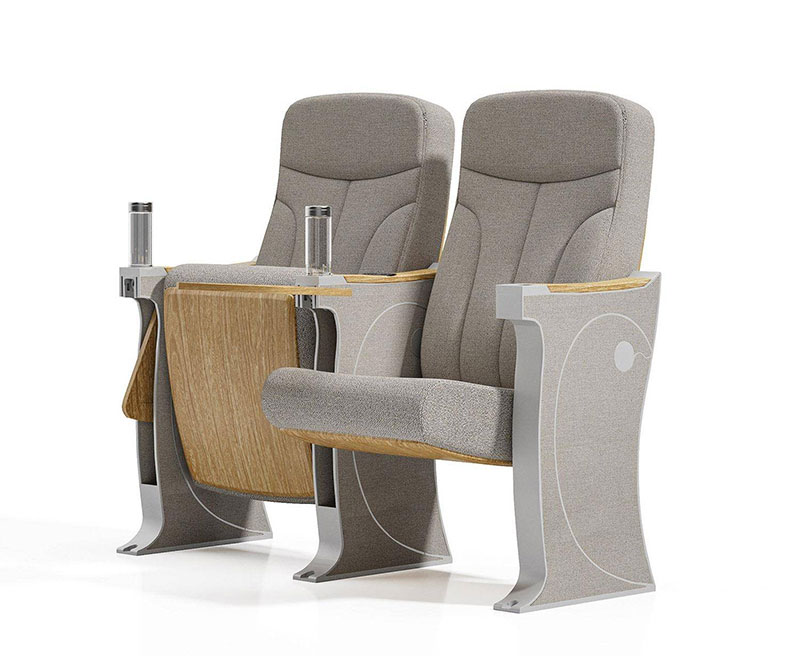
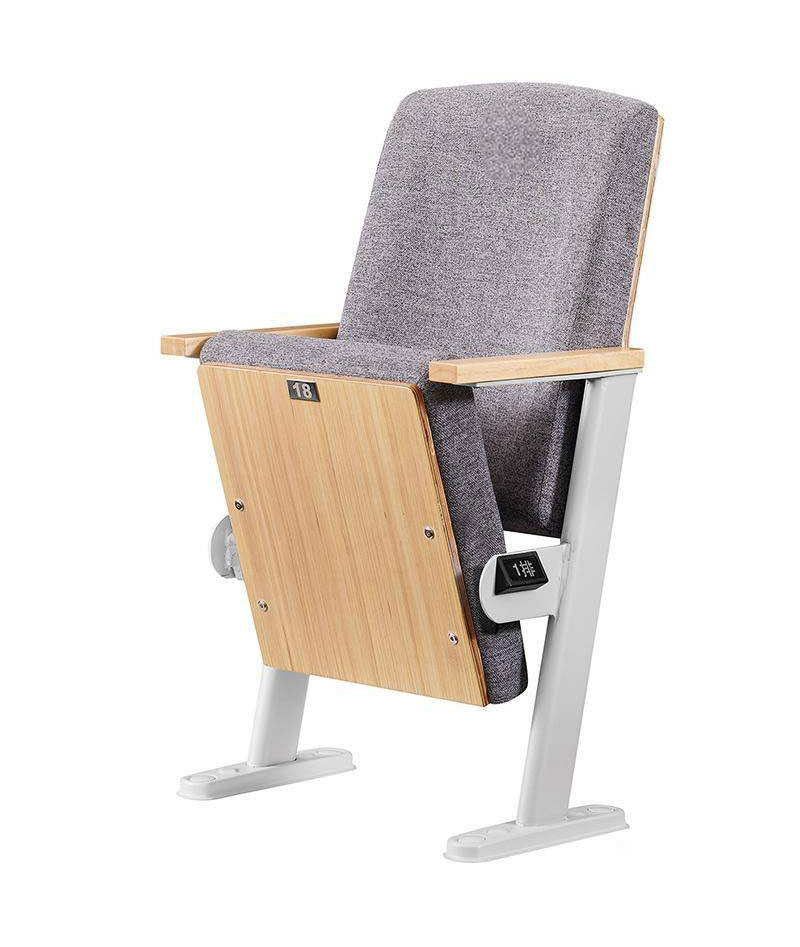
The core range is built around cinema and theater seating, extending to lecture hall seating, auditorium seating, linked row seating, public row seating, theater seats, auditorium chairs, tiered classroom chairs and assembly hall seating. Structurally these are almost all linked rows, designed for large rooms with many seats managed as one. In cinema and theater use, seats generally need a tipping seat, a concealed writing tablet on some models, and flame-retardant materials that meet fire codes. Lecture hall seating places more emphasis on raised rear sightlines and integrated desking. Tiered classroom chairs have to match the tier structure so every seat has a clear view. Auditorium seating is also common in sports halls and multi-purpose rooms, where abrasion resistance and fast cleaning matter more. Covering all of these sub-scenarios indicates a supplier with real experience in balancing customisation against standardisation.
What Is Publicly Documented
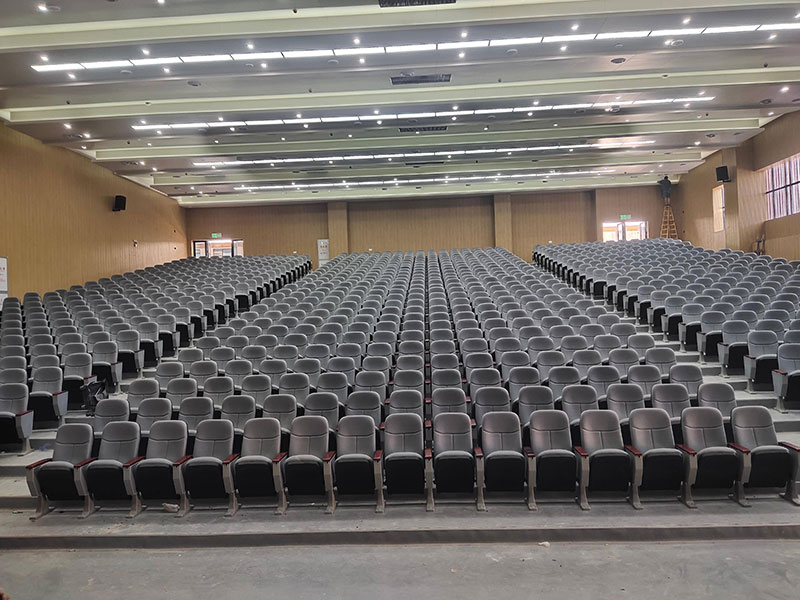
Public information shows a product system centred on public seating, able to cover space types from assembly halls to tiered classrooms. The listed categories include cinema and theater seating, auditorium chairs, theater seats, lecture hall seating, auditorium seating, linked row seating, public row seating, tiered classroom chairs and assembly hall seating — a broad spread of applications. That suggests a relatively complete product line, able to offer a matching model for different venue types. The "furniture manufacturing" positioning in the company name also suggests integration from material purchasing through final assembly, although this is a reasonable inference from public information rather than a documented figure.
Applications and Selection Points
When specifying cinema and theater seating, owners usually work through these practical questions:
- Dimensional fit: row pitch, seat width and armrest width have to correspond exactly to the structural grid and step positions. Audience depth and rake angle vary considerably between venues, so the modular design of linked rows must be checked against the builder's dimensions in advance.
- Acoustics and sightlines: back height and cushion thickness affect absorption and reflection in the hall. In theatrical venues especially, fabric and filling selection has to be coordinated with the acoustic design. At the same time, the height of a raised seat and the floor level difference must satisfy the unobstructed-view requirement.
- Durability and maintenance: these seats are high-frequency public facilities, so rust protection on the metal frame, the fatigue life of the tipping mechanism and the stain and abrasion resistance of the fabric are all long-term operating factors. Some venues require quick-release fixing so that carpet cleaning or repairs can be carried out.
- Fire and environmental compliance: seating in public places must meet flame-retardancy standards, and test reports for both fabric and filling are required. The environmental grade, such as formaldehyde emission, is also a hard threshold in tendering and framework procurement.
Industry Q&A
Seat tipping mechanisms fall mainly into two types: gravity return and spring-assisted return. Gravity return relies on the weight of the seat itself to bring it back once the occupant stands — simple, but it requires the seat to be heavy enough. Spring-assisted return uses an internal torsion or tension spring, which reacts more sharply but demands more of the spring's durability. Some higher-end seats use a damped mechanism to reduce noise.
Row pitch (the distance between the centre lines of two seats front to back) and seat width (the width of a single seat) have to balance ergonomics against space efficiency. Cinema row pitch is typically 90–100 cm, while theaters may reach 100–110 cm to allow more legroom. Seat width is commonly 48–56 cm; the exact figure is calculated from the average body size of the audience, armrest width and the viewing angle implied by the number of rows. This data is normally supplied by the architectural designer together with a specialist seating supplier.
Upholstery has to satisfy comfort, durability and fire requirements at once. Common choices include flame-retardant velour, flame-retardant linen and — mostly in VIP boxes — quality leather. Velour feels soft and absorbs sound well but holds dust; linen breathes well and resists wear but feels firmer. In practice some venues require the fabric to pass B1 or higher flame-retardancy testing, and to be anti-static and stain resistant.
The above can be used as a reference for understanding Guangdong Yingchi Furniture Industrial Co., Ltd. and its products.